


Understanding “Most Likely Score”
The Rules of Handicapping, similar to the Rules of Golf, promotes playing by the Rules of Golf. Recognizing terms like “maximum hole score,” “net double bogey,” etc., are part of the Rules of Handicapping, but those phrases may not seem like they are consistent with the Rules of Golf.
For handicap score posting purposes (Rules of Golf aficionados please remain calm) the ball does not have to be holed in order to have a score. Rule 3.3 from the Rules of Handicapping, is titled “When a Hole is Started But Player Does Not Hole Out.”
In that same Rule the term “Most Likely Score” is utilized (the italics indicate this is a defined term in the Rules of Handicapping). Here is the reference in the definitions section:
Most Likely Score:
The score a player records for handicap purposes for a hole that is started but where the player does not hole out (see Rule 3.3). The specifics in Rule 3.3 are …
The most likely score is:
- The number of strokes already taken to reach a position on a hole, plus
- The number of strokes the player would most likely require to complete the hole from that position, plus
- Any penalty strokes incurred during play of the hole.
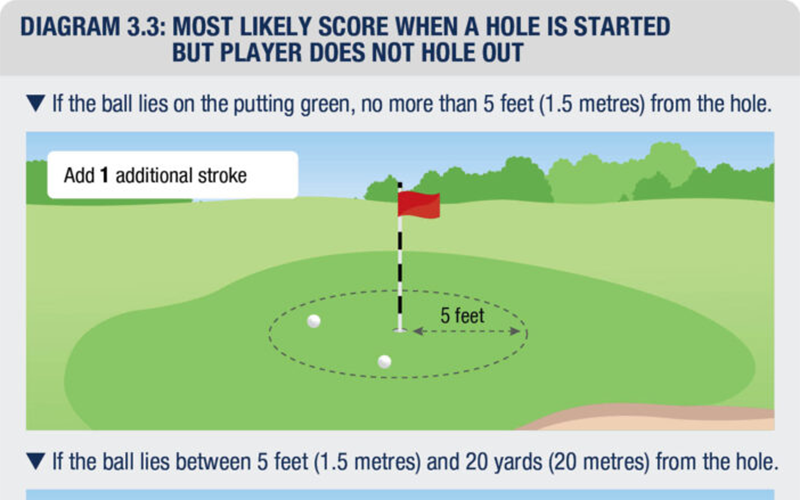
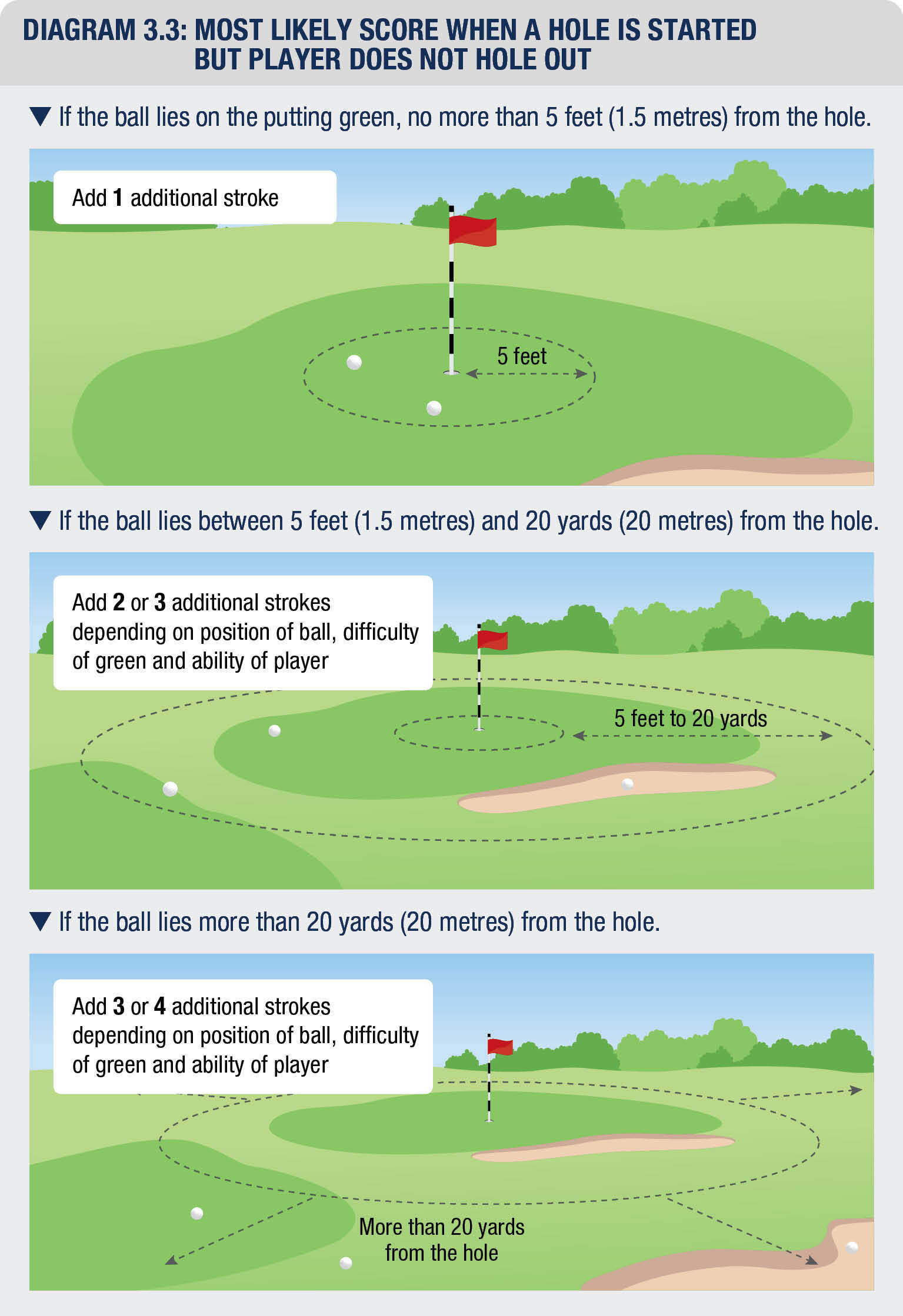
What the player would most likely require to complete the hole is subject to interpretation, so the Rules of Handicapping includes written guidelines and an illustration:
There are some notes in this Rule as well and here is an important one to clarify how frequently this can be used:
Note 1.
There is no limit to the number of most likely scores that can be recorded within a player’s adjusted gross score, provided that the failure to hole out is for a valid reason and not for the purpose of gaining an unfair scoring advantage.
The bottom line is, a hole that is started is considered a hole played for handicap purposes, and if the hole is not completed, the score is acceptable for handicap purposes, and guidelines exist to help in determining the score.
For more Handicap Hints, visit scga.org/whs-hub